
Blog
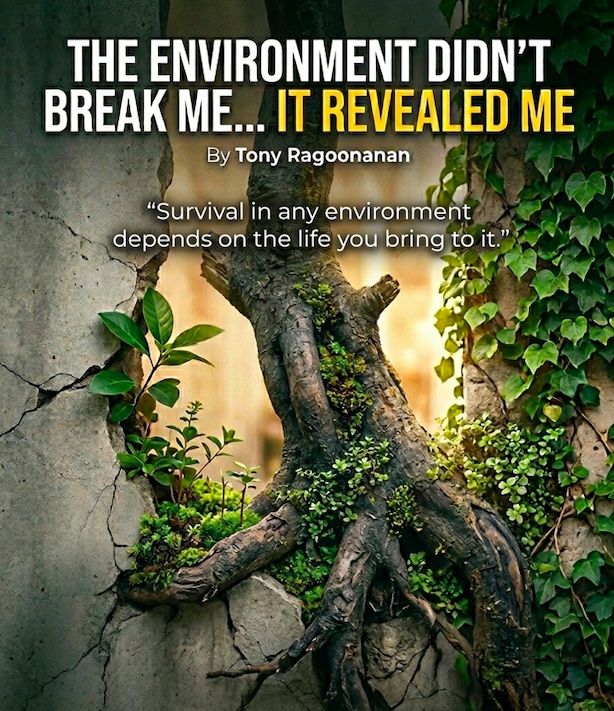
The Environment Didn’t Break Me …. It Revealed Me
In my mid to late 20s, I developed a dependency to a pharmaceutical product that was legally available…a cough mixture containing codeine. At the time, I called it relief. I couldn’t sleep because my mind wouldn’t switch off. Work followed me home…not physically, but mentally. Conversations replayed, decisions lingered and the pressure sat in my mind and body long after the workday was done. The codeine gave me what I thought I needed. It knocked me out for the night…the whole night.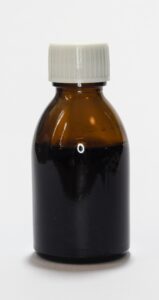
The environment I was in was intense. High turnover, constant pressure, and a culture where stress wasn’t just present….it was expected. The language, the pace, the expectations….it all reinforced a way of operating that kept you “on” all the time. On the surface, I was functioning. But internally, something was shifting. I was becoming more irritable by the day. I was shorter in my responses, less patient and more reactive.
At the time, I focused on the environment as the problem. Looking back, I realize the picture was much bigger.
However, taking a “big picture” view of the situation, 4 things stood out:
1. The Impact of the Environment
If I were to show you different environments on earth and ask if there is life there, the answer would always be yes. But the type of life would differ. A desert produces one kind of life. A rainforest produces another. The Arctic produces something entirely different. Each environment shapes what survives….and how it survives.
The same applies to us.
The environment I was in didn’t just influence my performance, it influenced my thinking, my emotional state, and ultimately my behaviour. In 1936, Kurt Lewin introduced a simple but powerful equation: Behaviour is a function of the person and their environment [B=f(PE)]. At that stage, I focused heavily on the environment. And to be fair, it played a significant role.
But here’s what I didn’t fully appreciate at the time: the environment doesn’t just shape how you act…..it shapes what you normalize.
Long hours became normal, pressure became normal, irritability became normal. And when something becomes normal, you stop questioning it. You adapt. You adjust your standards without realizing it. And over time, that adaptation starts to feel like identity and it certainly was becoming this for me.
2. My Level of Control (Emotional Intelligence)
The equation doesn’t stop at the environment. It includes the person as well. This is where Emotional Intelligence comes in.
Emotional Intelligence is the capacity to understand, manage, and express your own emotions effectively, while accurately interpreting and responding to the emotional demands of people, situations, and environments. At that stage in my life, my Emotional Intelligence wasn’t where it needed to be.
I didn’t have the awareness to fully recognize what was happening internally. I didn’t have the regulation to manage the pressure in a healthy way. And I didn’t have the tools to respond differently. So I looked for relief instead of resolution.
That’s where the codeine came in. It addressed a symptom…sleep….but ignored the cause.
There’s an important distinction here that often gets missed. Personality is your natural tendency. Emotional Intelligence is your regulation of that tendency. And your response is the combination of both in action. You can have strong natural tendencies…drive, intensity, decisiveness….but without regulation, those same strengths can turn into pressure, impatience, and reactivity.
It’s not just who you are. It’s how you manage who you are.
3. The Environment I Was Creating Around Me
This is the part that took the longest to see. I wasn’t just in an environment. I was contributing to it. My irritability didn’t stay internal. It showed up in my tone, my interactions, and my presence. It influenced how others experienced me. And in doing so, I was reinforcing the very environment I felt trapped in. That’s the uncomfortable truth. I was reacting to pressure, but my reactions were adding more pressure into the system.
“You don’t just live in an environment…you teach people how to experience you within it.”
Many professionals get stuck here. They look at the environment and say, “This is the problem.” And sometimes it is. But what often goes unexamined is the role we play in sustaining it.  Your emotional state is not neutral. It has an impact.
In leadership, in teams, in families…how you show up shapes the emotional climate around you. This connects to what Gabor Maté speaks about when he outlines three fundamental social needs: the need to belong, the need for attachment and connection, and the need to be ourselves….authenticity.
When irritability and tension dominate how we show up, we begin to disrupt these needs in others. People may still perform. But connection weakens. Authenticity reduces. And belonging becomes conditional.
4. My Desire to Improve (Vulnerability)
The turning point wasn’t only the environment changing. It was my willingness to look at myself. This is is something I had to do after leaving that job.
That’s where vulnerability comes in. And vulnerability is often misunderstood. It’s not about being soft or avoiding hard conversations. You can still be direct. You can still hold standards. You can still challenge people. But vulnerability is about this: the willingness to examine your own role in the situation.
At some level, I recognized that what I was doing wasn’t sustainable. The dependency, the irritability, the pressure. Something had to change. But change doesn’t start with the environment. It starts with self awareness.
When was the first time you were exposed to an environment? The womb. That early environment begins shaping behaviour long before we have any conscious control. And as we move through life, every environment continues to influence us.
But influence is not the same as control. You may not control every environment you enter. But you do have influence over how you interpret it, how you respond to it, and what you contribute to it.
“Survival in any environment depends on the life you bring to it.”
That doesn’t mean every environment is healthy. It doesn’t mean you should stay in environments that are clearly destructive. But it does mean your internal state matters as much as your external conditions.
Two people can be in the same environment and experience it very differently. The difference lies in awareness, regulation, interpretation, and response. That’s Emotional Intelligence in action.
Conclusion
Looking back, the dependency wasn’t just about a substance. It was about a response to pressure, a lack of regulation, an environment that normalized stress, and a delayed willingness to confront what was happening. But it was also a lesson. A lesson in how environments shape us. A lesson in how we shape environments. And a lesson in the importance of self-awareness and regulation. Because behaviour is not random. It is shaped by who you are and where you are, and growth begins when you take responsibility for both.
 Tony Ragoonanan is the Founder of V-Formation Training & Development. As a Certified Emotional Intelligence/Performance Strategist, he helps individuals, teams and organizations to align skills, behaviours and outcomes. Outside of this, it’s all about family, football, and fitness!!
868-681-3492 | tonyr0909@gmail.com


Related posts




to Tony’s fortnightly blog/article and immediately
receive a short but effective bit of information.
- Quick Links
- Home page
- About Us
- Testimonials
- OurCourses
- Blog
- Contact us
- Get In Touch
- Home
- About us
- Testimonials
- Our Courses
- Blog
- Contact
Leave a reply