

Blog
Shifting Your Posture Before the Proof Arrives
There is a well-known concept in high performance that tells us to live as if our goals are already achieved…..to carry ourselves as if the things we are working toward are already on the way.
It is a nice theory, but it is incredibly difficult to practice.
To understand how to actually bridge that gap, you have to understand a simple and fairly popular analogy:
Imagine walking into your bank today with a cheque for $10 million. You hand it to the teller, but there’s a catch: because of the massive amount, they have to place a mandatory seven-day hold on the funds. You cannot spend a single cent of it right now. You can’t buy anything new, you can’t pay off your debts yet, and you can’t quit your day job on the spot.
For the next week, your physical reality remains exactly the same. Your bank account balance hasn’t shifted, your bills are still due, and your daily routine hasn’t changed by an inch.
Yet, you would spend those seven days on cloud nine.
Your energy would be completely different. Your baseline stress would evaporate. The way you carry yourself, interact with your team, handle minor annoyances, and view current challenges would completely transform. You would walk into every room with a quiet, unshakeable smile.
Why? Because your entire emotional baseline shifted based on a reality that hasn’t technically arrived yet. What you are experiencing in that moment is a powerful psychological state: certainty before arrival.
The joy isn’t really the physical million dollars in your hand…it’s the internal feeling: “It’s already mine. It’s only a matter of time.”
The Neurobiology of Anticipation
People often assume our emotional state is a direct reaction to our immediate, physical circumstances. We believe we feel good because a client just signed, or we feel anxious because a number dropped. But human psychology doesn’t work in a purely reactive loop. In fact, human beings frequently feel far more alive in anticipation than in possession.
Think about it: the months spent imagining a vacation are often filled with more sustained happiness than the actual trip itself. The early stages of falling in love, the quiet buildup before launching a massive project, the nervous excitement of waiting for good news…..our entire nervous system lights up when the future feels both exciting and inevitable.
There is a distinct biological principle behind this. In the brain, dopamine is strongly tied to anticipation, not just the reward.
For a long time, popular psychology taught that dopamine was the “pleasure chemical” released after you achieve a goal. Modern neuroscience has corrected this: dopamine is actually the molecule of pursuit, expectation, and drive. It spikes when your brain recognizes a clear signal that a reward is coming. The brain absolutely loves the sense that something deeply meaningful is on the horizon.
The core challenge in professional performance and leadership is that most people only allow themselves to access that emotional baseline after the external proof appears. We live in a self-imposed prison of emotional postponement. We unconsciously tell ourselves:
-
“I’ll carry myself like an industry leader once I finally get the title.”
-
“I’ll speak with absolute authority once the market validates my business idea.”
-
“I’ll build a high-performance culture once my team starts listening to me.”
-
“I’ll experience calm and security once the economy steadies and this contract is signed.”
But waiting for the world to validate you before you change your posture is a backward strategy. It keeps you locked in a state of scarcity, where your emotions are constantly hijacked by external volatility.
The deeper skill, the real work of emotional self-mastery…..is learning to generate that state of certainty before the evidence fully arrives. It is about shifting away from a volatile, temporary lottery high and moving into a quieter, more sustainable internal posture: grounded expectation, meaningful direction, and trust in unfolding results. It’s about creating a permanent inner tailwind.
The 5 Pillars of Grounded Expectation
To operate with your psychological cheque already in hand, you have to intentionally train your cognitive filtering systems to live slightly ahead of your current reality. This isn’t about hollow visualizations or toxic positivity; it is a deliberate, strategic realignment of your emotional baseline.
Here is how you build that discipline step-by-step:
1. Create Believable Future Certainty
Your brain has a highly sophisticated filtering mechanism called the Reticular Activating System (RAS). Its job is to filter out millions of pieces of useless data and only let in what it believes is important to you. If you fantasize vaguely about abstract success, your brain treats it as a daydream…a fiction. It doesn’t trigger certainty; it triggers longing.
To build true certainty, don’t fantasize vaguely. Pick specific, tangible outcomes you are actively and deliberately building toward right now. Instead of a passive, wishful thought like, “Maybe someday my business will scale,” train your mind to adopt a process-driven identity. Think:
“I am actively becoming the kind of professional this outcome naturally happens to.”
“This development is currently in process.”
When the future outcome feels logical and tied to your current discipline, your brain accepts it as an inevitability, shifting your nervous system out of fight-or-flight and into calm execution.
2. Shift from Hoping to Expecting
Examine the vocabulary you use internally and externally. Words are the architects of our emotional states. Hope is inherently passive and rooted in a lack of control. When you say, “I hope this meeting goes well,” or “I hope the client likes the proposal,” you are implicitly saying, “I wish this would happen, but I am powerless over the outcome.” This keeps your emotional baseline anxious.
Expectation, however, is an active operational framework. Expectation says, “This is unfolding.” Think of a farmer who plants a seed; they don’t sit by the dirt crying and hoping a plant grows. They expect it to grow because they understand the law of the process. That subtle shift from hoping to expecting completely changes your internal posture, removing desperation from your delivery and replacing it with authority.
3. Keep Evidence of Momentum
The “cheque” feeling relies heavily on tangible proof. If you hold a blank piece of paper, you don’t feel wealthy; if you hold an official cheque, you do. Therefore, to sustain this emotional baseline, you must manufacture your own tangible proof intentionally by tracking your momentum.
Do not wait for giant milestones to celebrate. Your brain needs micro-confirmations to trust the future. Track the small wins daily:
-
The consistency of your daily execution habits.
-
The expanding depth of your professional skills.
-
The gradual deepening of a key client relationship.
-
The steady incremental growth of your business metrics.
When you deliberately document these wins, you provide your brain with the undeniable data it needs to conclude that your ultimate success is inevitable.
4. Live Slightly Ahead of Current Reality Emotionally
This is not delusion; it is emotional rehearsal. Top athletes do not wait until they are on the field to figure out how to feel; they rehearse the feeling of victory and focus long before the game begins.
Before you step into a high-stakes environment, a critical boardroom presentation, or a difficult performance conversation with a team member, pause and run a quick diagnostic cheque. Ask yourself:
-
“How would I walk into this building today if I knew for a fact that things were already working out perfectly behind the scenes?”
-
“How would I speak? How would I listen?”
-
“What would calm, unshakeable confidence actually feel like in my posture right now?”
By deliberately stepping into that emotional state ahead of time, you alter your tone of voice, your body language, and your cognitive sharpness in the present moment.
5. Stop Postponing Emotional Permission
Too many leaders unconsciously operate on a conditional emotional model: “I’ll allow myself to feel successful and relaxed WHEN the goal is reached.” What they fail to realize is that the emotional state itself is the exact mechanism required to produce the result in the first place.
Here is the performance loop:
When you show up to a negotiation or a leadership challenge with a baseline of anxiety and scarcity, your execution suffers. You overreact, you rush, and you miss critical cues. But when you grant yourself emotional permission to operate from a place of calm certainty, your actions become clean, measured, and highly effective. Better actions inevitably drive better outcomes.
Carry the Cheque
The world responds to your posture; your posture should never simply be a passive reflection of your immediate environment.
If you allow your emotional state to be dictated entirely by today’s metrics, today’s market fluctuations, or today’s emails, you will always be a reactive manager rather than a strategic leader.
You do not need to wait for the market to turn, the promotion to clear, or the world to validate you before you change how you show up. Look at the direction you have chosen, trust the work you are putting in, and step into the quiet confidence of knowing that the result is already in motion.
Stop waiting for the proof to arrive before you change your posture.
Carry the cheque.
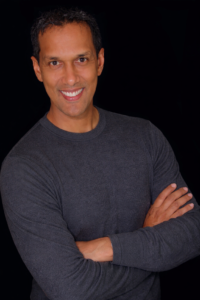 Tony Ragoonanan is the Founder of V-Formation Training & Development. As a Certified Emotional Intelligence/Performance Strategist, he helps individuals, teams and organizations to align skills, behaviours and outcomes. Outside of this, it’s all about family, football, and fitness!!
868-681-3492 | tonyr0909@gmail.com

Related posts



to Tony’s fortnightly blog/article and immediately
receive a short but effective bit of information.
- Quick Links
- Home page
- About Us
- Testimonials
- OurCourses
- Blog
- Contact us
- Get In Touch
- Home
- About us
- Testimonials
- Our Courses
- Blog
- Contact
Leave a reply